
Size matters more than people think when it comes to digital signage in Malaysia.
In addition to making your brand more visible, it also affects how well the content performs, how engaged your audience is, and whether you’re spending wisely. Yet, screen sizing is one of the most commonly overlooked decisions.
In Malaysia, it’s not unusual to see businesses using screens that are either too large for small spaces or too tiny to be seen from across the room. Contrary to popular belief, bigger doesn’t always mean better.
The right screen is the one that fits your purpose, space, and audience.
Let’s break down what you need to consider.
Table of Contents
Viewing Distance, Angle, & Placement of Digital Signage in Malaysia

The further your viewer is, the bigger your screen needs to be.
A helpful rule of thumb: one inch (2.54 cm) of screen size per foot (30.48 cm) of viewing distance. So, if your audience will be five feet away, a 43–50” screen is a safe bet.
But it’s not just about distance. Placement affects sightlines. A screen mounted too high or tucked into a corner won’t perform well. Think about where your customers stand, sit, or walk. Ceiling height, wall width, and furniture layout all matter.
Orientation also plays a role. Portrait screens suit directories and product highlights. Landscape orientation works better for menus, ads, or content with multiple sections.
For example:
- A 43” screen fits perfectly in a café, showing promotions or queue numbers.
- A 75” screen makes sense in a hotel lobby where it needs to stand out from afar.
Proper screen placement and sizing help capture attention in busy environments, ensuring your message is noticed even in high-traffic areas.
Match Digital Signage Screens Size to Purpose and Content Type

The type of digital signage content displayed should guide your screen size selection.
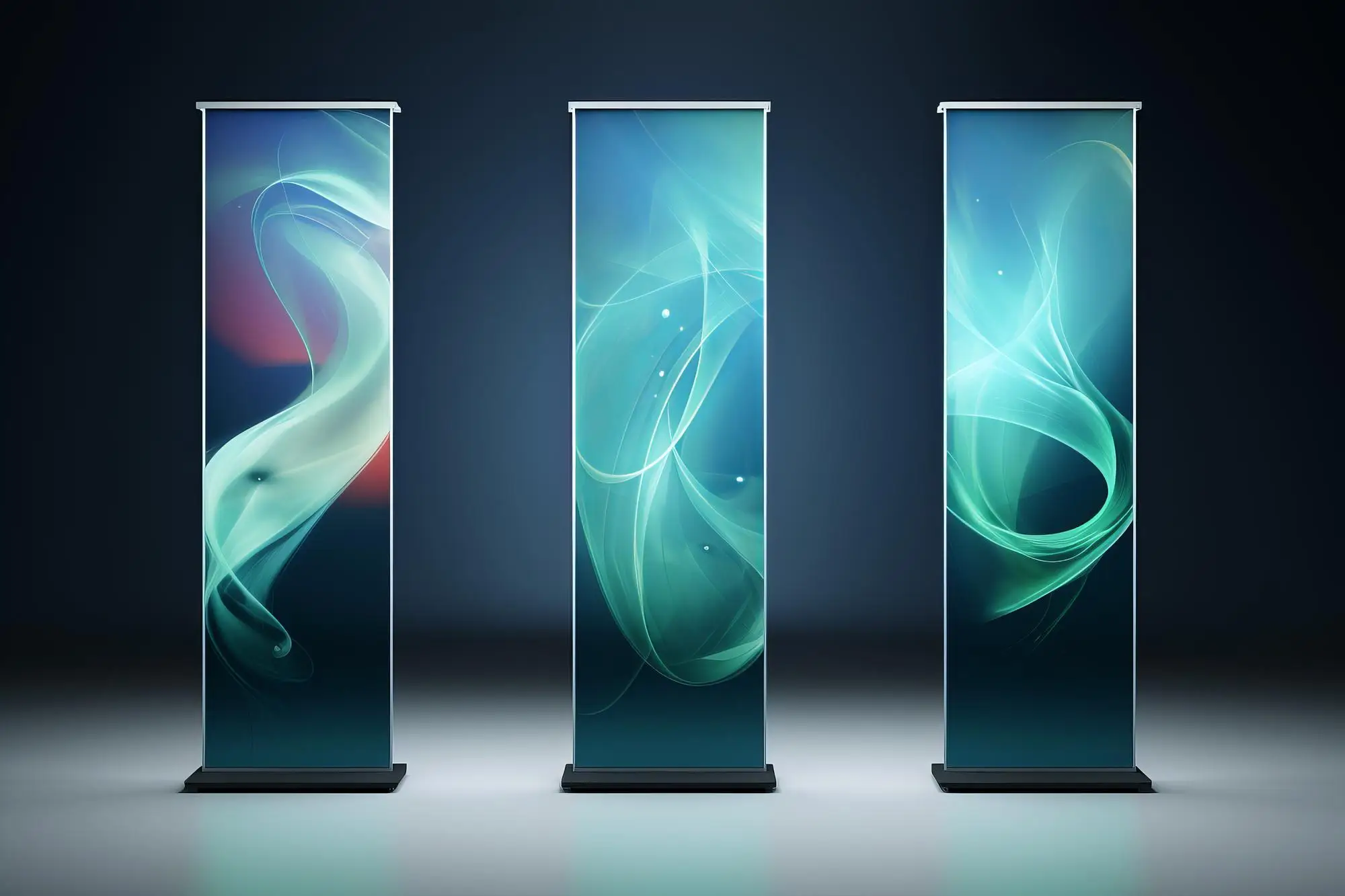
Not every screen needs to show flashy videos, and not every flashy video needs a billboard-sized screen. A smartly placed digital standee in Malaysia is often more than enough for the task. The key is to size your screen based on what’s being displayed.
Here’s a look at how content type guides screen size:
- Wayfinding or Directory Boards
Needs high legibility, often placed in open spaces. Use larger screens (55” and above).
- Menu Boards
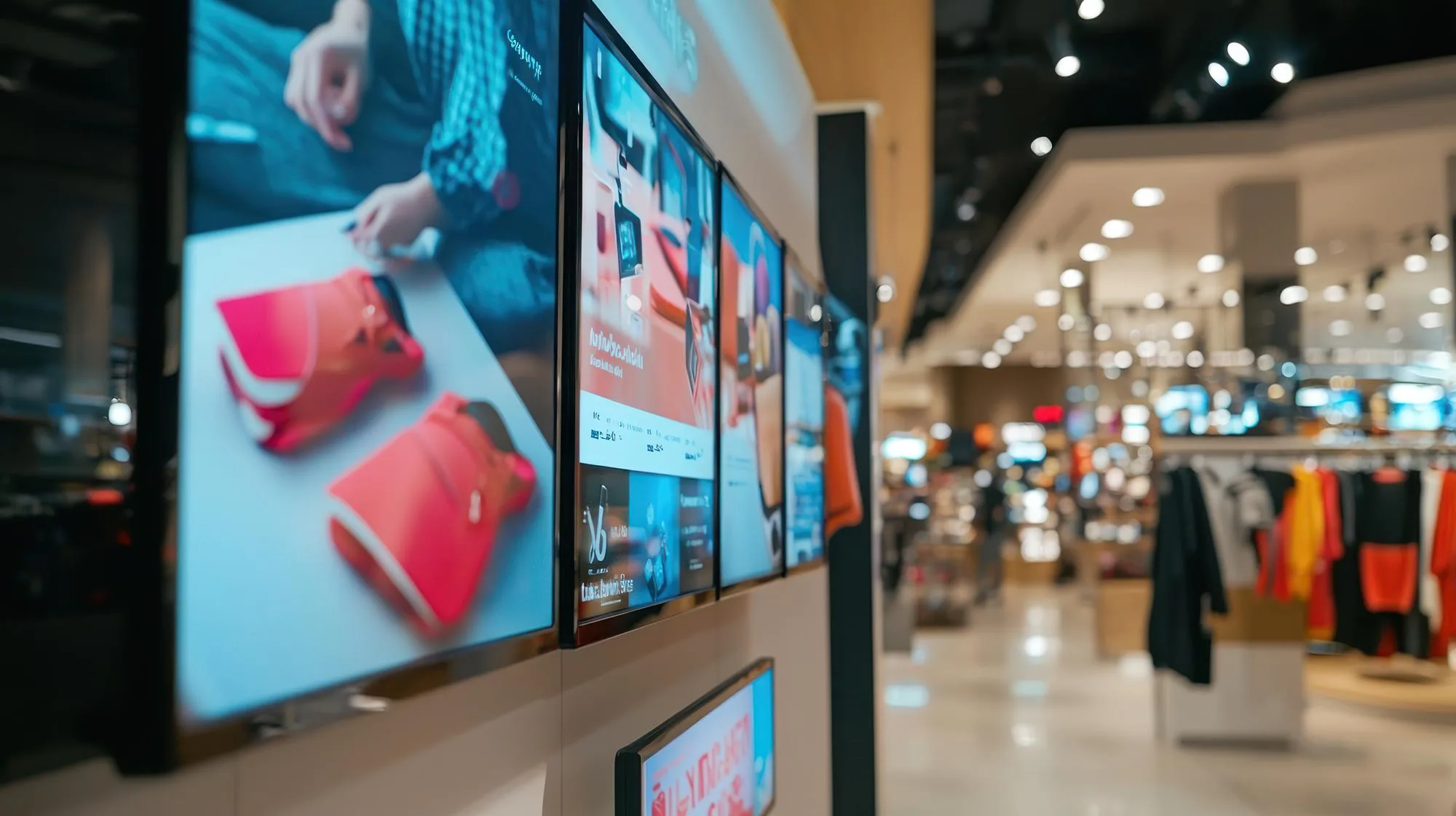
Wide-format displays, such as a digital menu board, work well for splitting items across sections. Screens in the 43–55” range are ideal above counters so that menus and promotions are clearly displayed.
- Promotional Videos or Product Demos
These demand visual impact. Large, high-resolution displays help hold attention, and the system’s ability to deliver high-impact playback ensures your message reaches different audiences effectively.
- Text-Only Notices
A smaller screen is often enough for the job if the font is readable and the message is short.
Always align content design with screen specs and the specific needs of your audiences. Avoid cramming too much text or running high-res content on a screen too small to do it justice.
In addition, a content management system or digital signage software helps you schedule, manage, and create content tailored to business needs. This goes a long way in making sure that the right content is displayed at the right time.
Space Constraints & Environment Fit

The screen should complement your space, not overpower it.
One of the biggest mistakes is forcing a screen where it doesn’t belong, especially in facilities like offices, retail stores, or public spaces.
Think about:
- Mounting Method
Will it hang from the ceiling, sit on the floor, or be flush with the wall? Consider whether a monitor or free-standing digital display is the best fit for your setup.
- Environment Size
A huge screen in a small meeting room creates visual discomfort. Likewise, a tiny screen in a large space gets ignored. A 22”–32” screen often works better for compact spaces, and integrated screens can enhance the look and feel of the environment.
- Lighting Conditions
Bright areas need high-brightness screens. Natural light can wash out displays, especially if they’re not angled well.
Striking the right balance keeps your screen visible, readable, and improves both visibility and aesthetics.
Industry-Specific Digital Signage Recommendations

Digital signage solutions are used across various industries, including hospitality, retail, and public spaces, and can be tailored to specific client needs for maximum impact and engagement.
Not all businesses need the same screen size. Here’s a quick guide based on common setups in Malaysia:
- Retail Stores
- 50–65” for window or wall-mounted promos using digital displays and digital kiosks for advertising and promotions
- 22–32” at product shelves for price or feature displays
- Restaurants & F&B Outlets
- 43–55” above counters for dynamic menus and combo deals
- Hotels & Resorts
- 65–75” in lobbies and event spaces for welcome messages, event boards, or branding visuals, utilising hospitality-focused video wall and LED screens for entertainment and brand image
- Corporate Offices
- 32” outside meeting rooms for scheduling info
- 55”+ at reception areas to display company videos or visitor instructions
- Transport Hubs
- 75”+ for high-traffic announcement boards or travel schedules, ideal for outdoor advertising with large LED displays in public spaces
Quality, expertise, and service are essential in delivering cost-effective and affordable digital signage systems for various projects. A reliable digital signage system integrates digital displays, media players, and software to deliver high-quality solutions and a seamless experience for clients.
Budget, Scalability, & Smart Planning

Screen size affects not just the upfront cost but everything that comes after.
Generally, larger screens come with:
- Higher cost to buy, mount, and maintain
- More electricity usage
- Stronger hardware requirements or content management systems to function efficiently
If you’re planning for expansion or want flexibility, modular LED displays can scale as your needs grow. They’re especially useful for event halls or retail chains.
Total Cost of Ownership (TCO) is another important factor to consider. It includes installation costs, mounting hardware, potential air-conditioning needs, energy use over time, as well as the need for technical support and service to maintain a seamless user experience.
To avoid missteps, it’s wise to do your due diligence and look up a reliable digital signage company in Malaysia that understands how to match screen size with your business goals, like Blupepper.
Working with a digital display provider in Malaysia that offers tailored solutions, proven expertise, and an expert team ensures your specific business needs are met and you receive the right support for successful projects. We’ll see to it that your setup remains effective as your space or needs evolve.
Get the Right Fit, Not Just the Biggest Screen
Choosing the optimal screen size for your digital signage isn’t about being flashy. It’s about creating a clear, engaging, and appropriate communication tool.
A well-fitted screen pushes user experience to the next level, improves audience retention, and gets your message across more efficiently, all while keeping costs under control.
If you’re unsure where to start or need help planning your setup, get in touch with Blupepper today. Our team can help assess your space, goals, and content needs to recommend the perfect digital signage and electronic display solutions for your business in Malaysia.