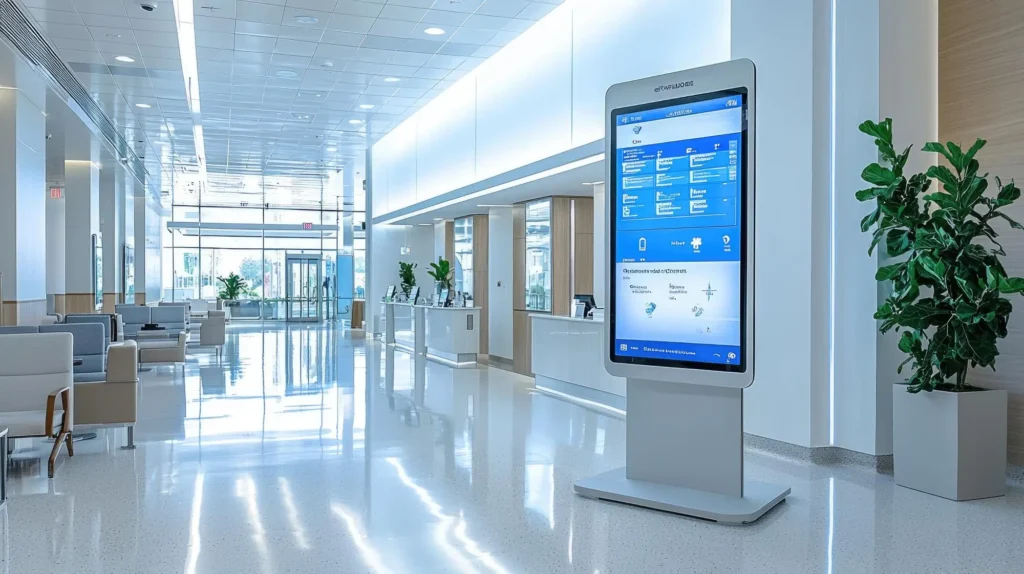
Digital signage for hospitals in Singapore is being adopted mainly to improve wayfinding, share real-time queue and health information, and streamline internal communication rather than for marketing purposes.
Singapore’s healthcare institutions operate under strict advertising rules, so the appeal of digital signage here is different from retail or F&B.
It is about clarity, efficiency and a calmer patient experience.
Key Takeaways
- Hospitals in Singapore are adopting digital signage mainly for wayfinding, queue updates and patient information rather than promotional advertising.
- Content shown within hospital premises must stay informational and comply with MOH guidelines, unlike signage used in retail settings.
- Common use cases include lobby directories, pharmacy and clinic queue screens, health education content and staff communication boards.
- A centralised, cloud-based system makes it easier to update multiple screens across a large hospital campus without manual intervention.
The Real Reason Hospitals Are Making the Switch
Printed posters and static directories have long been the default in Singapore hospitals.
The problem is that hospital information changes constantly. Clinic schedules shift, queue numbers move, health advisories get updated, and directions to a newly relocated department need to reach visitors immediately.
Digital signage solves this by letting hospital staff update content centrally and push it out across every connected screen in minutes rather than days.
This is particularly useful in large healthcare campuses where dozens of screens may be spread across lobbies, clinics, pharmacies and waiting areas, each needing slightly different information at different times.

Where the Screens Actually Make a Difference
Not every corner of a hospital needs a screen, but certain areas benefit noticeably from digital displays over static signs.
Lobby and Lift Lobby Wayfinding
Large hospitals can be confusing for first-time visitors. Digital directories placed near entrances and lift lobbies help people find departments faster, reducing the number of visitors who need to stop and ask staff for directions.
Pharmacy and Clinic Queue Displays
Waiting for medication or a consultation is rarely pleasant. Screens showing queue numbers and estimated wait times give patients a clearer sense of progress, which can make the wait feel more manageable even when the actual time does not change.
Health Education in Waiting Areas
Waiting rooms are a natural place to share general health information, such as seasonal health advisories or preventive care tips, provided the content stays fresh and educational rather than promotional in tone.
Staff Pantries and Back-of-House Areas
Digital signage is not only for patients and visitors. Many hospitals use screens in staff areas to share company updates and safety notices, replacing scattered printed memos.
What Makes Digital Signage for Hospitals Singapore Different
Unlike a shopping mall or café, hospitals in Singapore operate under the Healthcare Services (Advertisement) Regulations set by the Ministry of Health.
These rules restrict how healthcare institutions can advertise, particularly outside their licensed premises.
Within the hospital itself, however, digital signage can be used for information, education and operational purposes, as long as the content stays accurate and does not cross into promotional territory.
This distinction matters a great deal when planning content. A screen showing clinic opening hours or a queue number is very different from one running a promotional campaign, and hospitals need to be deliberate about which side of that line their content sits on.
Getting this wrong is not a small matter either, since penalties for breaching advertising rules can be significant, which is why many hospitals lean towards conservative, purely informational content on their screens.
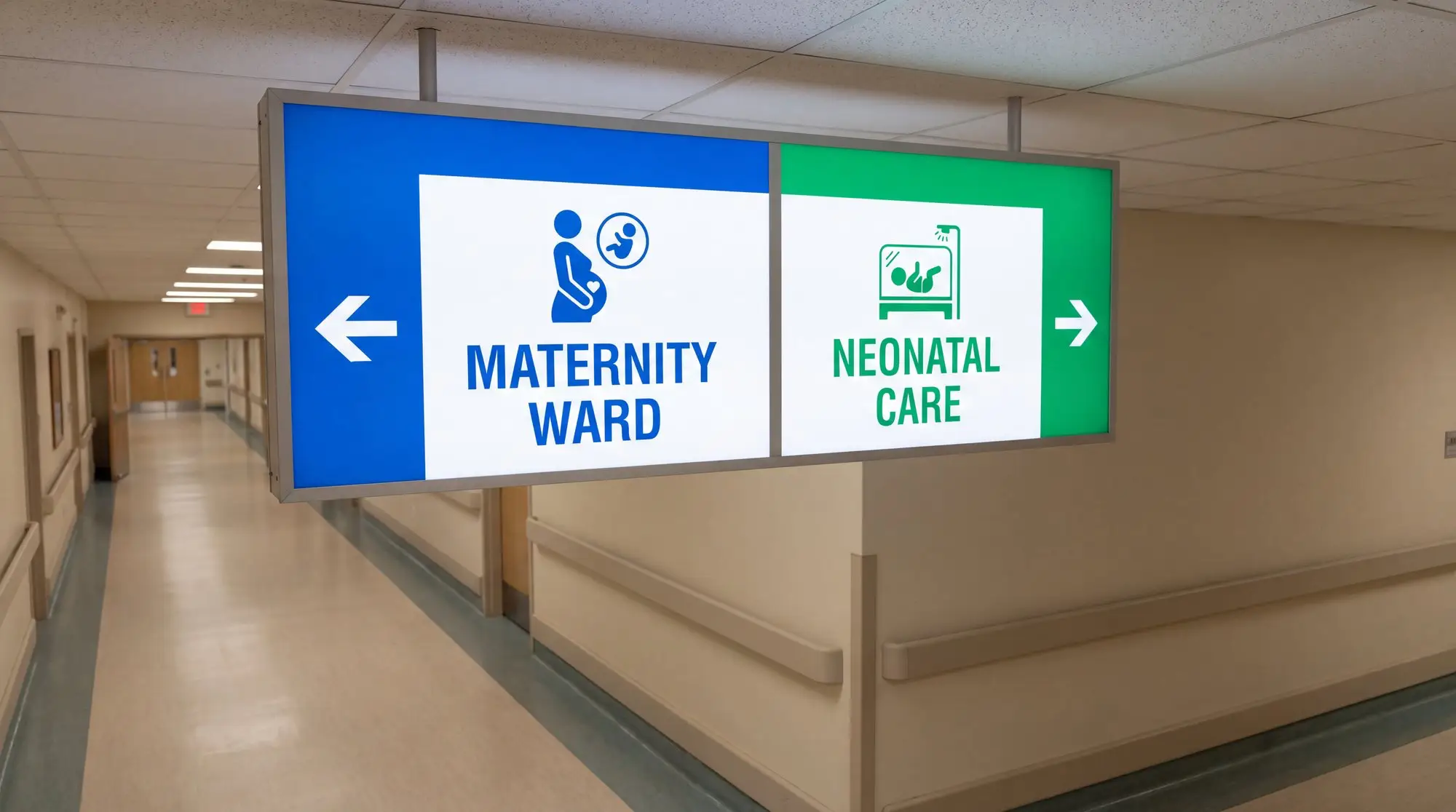
Static Signs vs Digital Displays in a Hospital Setting
The comparison below highlights why hospitals are gradually moving away from printed signage for time-sensitive information.
| Aspect | Static Signage | Digital Signage |
|---|---|---|
| Updating information | Requires reprinting and manual replacement | Updated centrally and pushed to screens instantly |
| Consistency across locations | Can vary between departments or floors | Managed from one dashboard for consistency |
| Queue and wait-time updates | Not possible in real time | Reflects live queue data as it changes |
| Staff time required | Ongoing printing and swapping | Minimal once content is scheduled |
Getting the Rollout Right in a Hospital Environment
Introducing digital signage across a hospital is not the same as deploying it in a single retail store.
Hospitals typically involve multiple stakeholders, including administration, facilities, IT and clinical departments, all of whom may need a say in what appears on screen and where.
A few practical considerations tend to come up early in these projects.
- Centralised content control: With screens spread across lobbies, clinics and pharmacies, a cloud-based system that lets one team manage all displays from a single dashboard avoids the need to update each screen individually.
- Scheduling for different areas: Content relevant to a pharmacy queue is not the same as content for a staff pantry, so the ability to group and schedule screens by location matters.
- Reliability and uptime: A screen that goes blank in a busy waiting area creates more confusion than no screen at all, so stable, dependable software is essential.
- Compliance-aware content design: Content should be planned with MOH’s information versus advertising distinction in mind from the outset, rather than adjusted after the fact.
These are the same practical concerns that come up in any large-scale digital signage deployment, whether it is a hospital, a school campus or a multi-outlet retail chain, which is why a flexible, cloud-based content management system tends to work better than a collection of standalone screens.
A Calmer, Clearer Hospital Experience
The shift towards digital signage in Singapore hospitals is not about following a trend.
It reflects a practical need to keep patients informed, reduce confusion around wayfinding and queues, and give staff a simpler way to communicate internally, all while staying within the boundaries set by healthcare advertising regulations.
As more institutions look to modernise their patient communication without straying into promotional territory, cloud-based digital signage offers a way to manage all of this centrally, across as many screens as a campus requires.
To see how this could work for your own hospital or clinic, visit Blupepper to learn more.