Table of Contents
Walk through any modern shopping mall or corporate office in Malaysia today, and you will notice something different about the way information is presented.
Screens have replaced posters. Digital displays show promotions that change throughout the day. Directory boards update themselves. Meeting room schedules appear on panels outside conference spaces.
That shift is driven by indoor digital signage Malaysia adoption, and it is reshaping how businesses communicate with customers, employees and visitors across retail, corporate and mixed-use environments.
This article explores what indoor digital signage can actually do in Malaysian offices and malls, the practical applications that deliver real value, and what separates effective installations from expensive screens that sit underutilised.
Key Takeaways
- Indoor digital signage enables real-time content updates across multiple locations without manual intervention
- Malls use signage for wayfinding, promotions, event announcements and tenant advertising
- Corporate offices deploy screens for internal communication, meeting room management and visitor engagement
- Effective indoor signage depends on display placement, content strategy and reliable software management
Why Indoor Signage Works Differently
Indoor environments offer controlled lighting, stable temperatures and predictable viewing conditions. That makes them fundamentally different from outdoor installations.
Screens do not need the extreme brightness required to compete with direct sunlight. They do not need weatherproofing. They can use standard commercial-grade panels designed for extended daily operation.
But indoor signage faces its own challenges. Viewing distances are often shorter, meaning lower-quality content becomes more obvious. Audiences are closer and more attentive, so messaging needs to be sharper and more relevant.
The advantage is that indoor digital signage can be more precise, more interactive and more integrated with other business systems than outdoor equivalents.
What Malls Are Using Digital Signage For
Shopping malls in Malaysia were among the earliest adopters of indoor signage, and their use cases have expanded well beyond simple advertising.
Wayfinding and Directory Systems
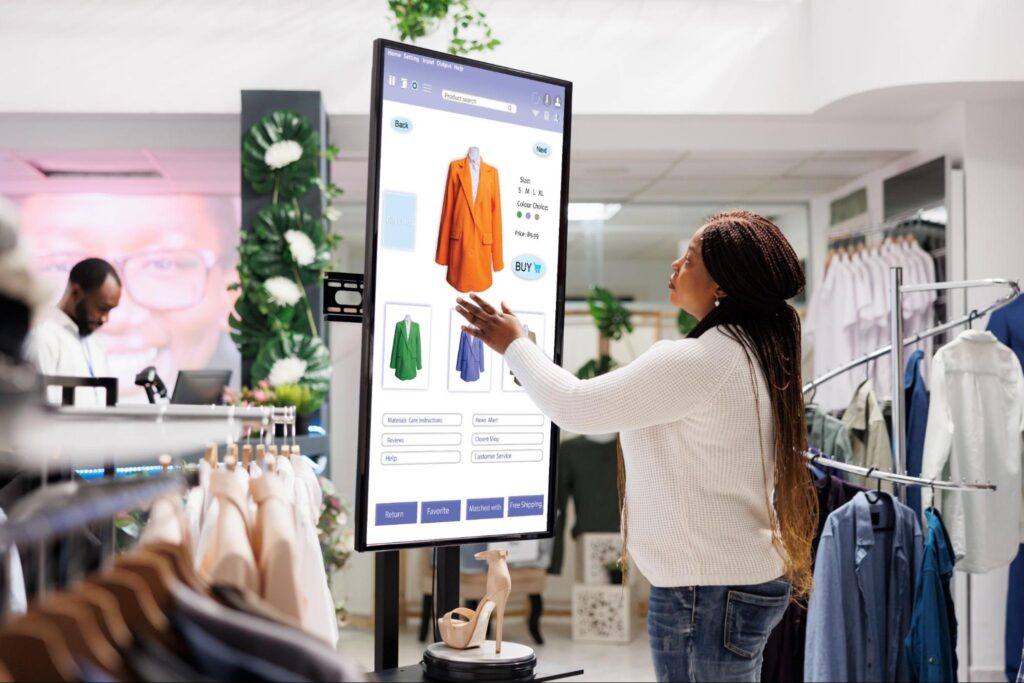
Digital directories replace static maps with interactive touchscreens that let visitors search for stores, restaurants and facilities. These systems can show real-time updates, highlight promotions and guide visitors to specific locations.
Unlike printed directories, digital versions can be updated instantly when tenants move or new stores open.
Promotional Displays and Tenant Advertising
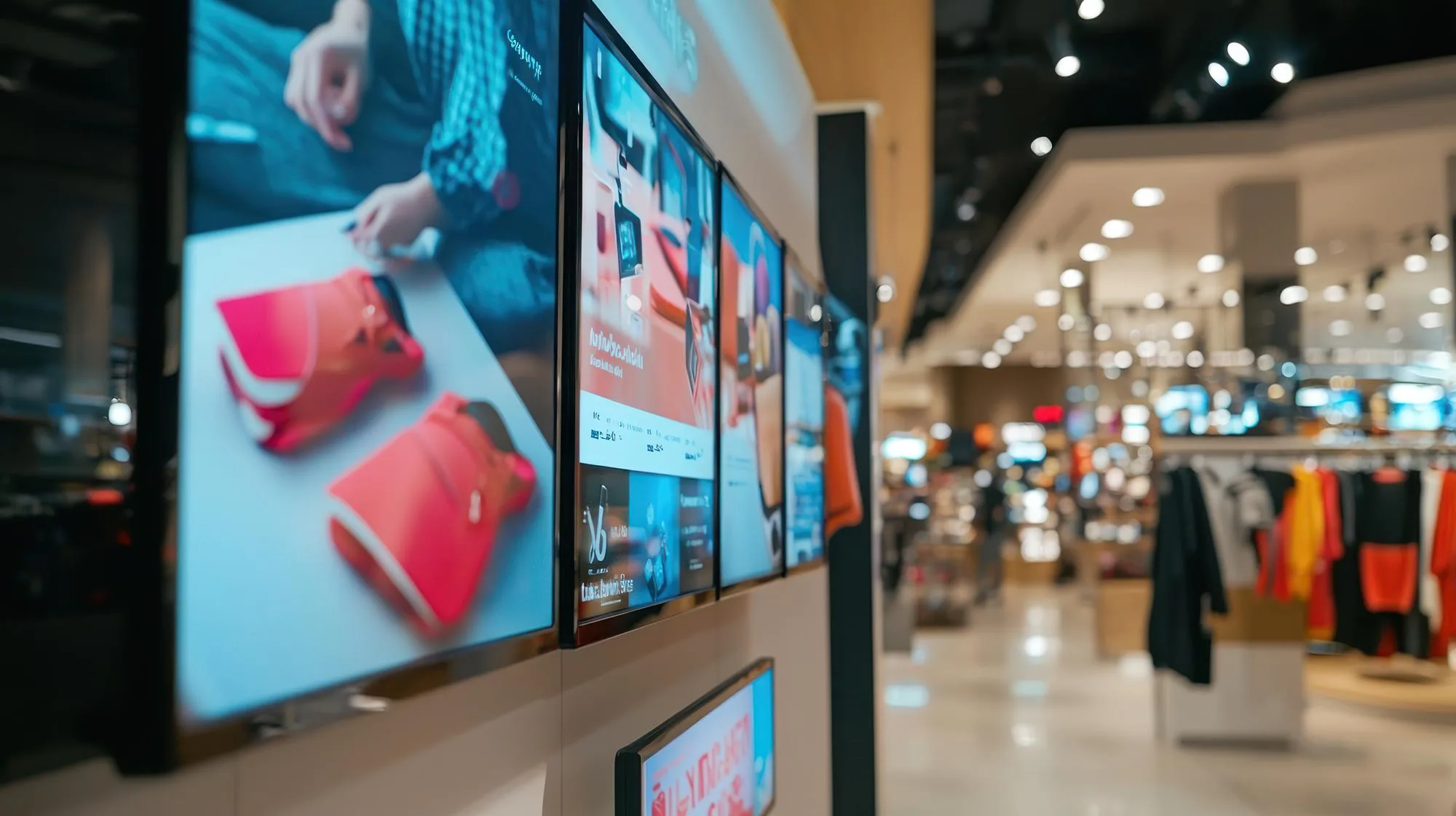
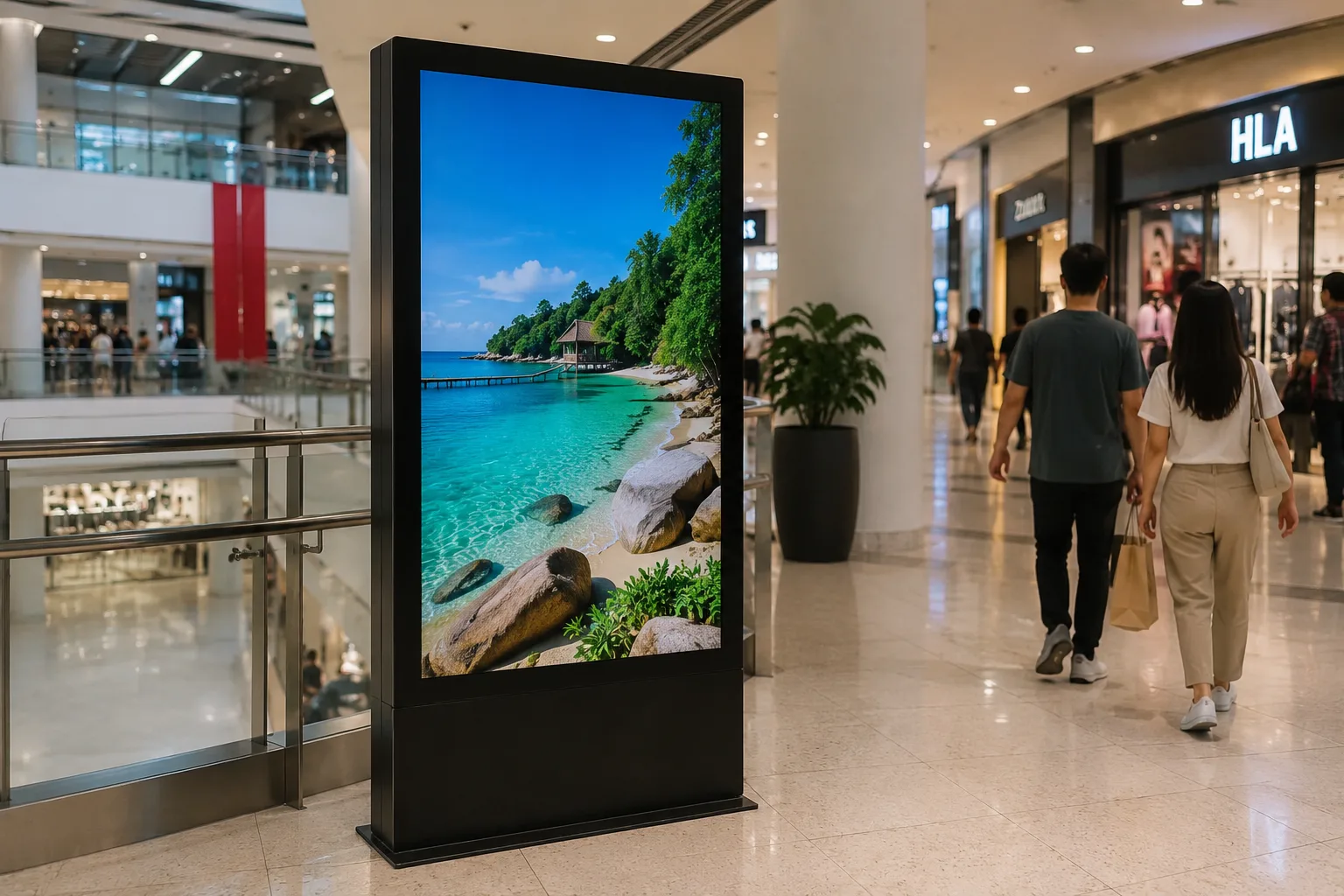
Large-format screens in atriums, corridors and near escalators display rotating advertisements for mall tenants. Content can be scheduled by time of day, day of week or promotional calendar.
This creates a new revenue stream for mall operators while giving tenants a high-visibility advertising channel without needing to negotiate individual placements.
Event Announcements and Real-Time Information
Malls hosting events, performances or seasonal campaigns use signage to broadcast schedules, updates and live content. Screens can show countdowns, social media feeds or live video from event spaces.
During peak shopping periods, signage can display car park availability, queue updates or safety announcements.

How Offices Are Deploying Indoor Digital Signage Malaysia
Corporate environments use signage differently, with a focus on internal communication, operational efficiency and brand reinforcement.
Reception and Visitor Displays
Lobby screens welcome visitors, display company branding and show real-time information such as meeting schedules or corporate announcements. They replace static posters and create a more dynamic first impression.
For businesses with frequent visitors, these displays can show personalised welcome messages or event-specific content.
Meeting Room Management Panels
Small screens mounted outside meeting rooms show room availability, current bookings and upcoming schedules. Employees can see at a glance whether a room is free without checking a calendar system.
These panels often integrate with office booking software, updating automatically as reservations are made or cancelled.
Internal Communication Boards
Screens in break rooms, corridors and common areas display company news, performance dashboards, safety reminders and employee recognition content. They replace noticeboards and email overload with visual communication that reaches employees where they already gather.
For multi-location businesses, this ensures consistent messaging across all offices without needing to print and distribute materials branch by branch.

The Role of Screen Placement and Viewing Distance
Effective indoor signage depends as much on where the screen is placed as on what it displays.
Viewing distance determines the ideal screen size and resolution. A screen mounted high on a wall in a mall atrium can be larger and lower resolution because viewers are further away. A screen at eye level in a retail store needs higher resolution because viewers are closer.
Placement also affects engagement. Screens positioned along natural walking paths or near decision points, such as lifts or store entrances, receive more attention than those tucked into corners.
Choosing the right digital signage display size for each location ensures content is legible and impactful without overwhelming the space.
Content Strategy Matters More Than Hardware
The most common mistake businesses make with indoor signage is treating it as a one-time installation rather than an ongoing communication channel.
A screen displaying the same static image for weeks becomes invisible to regular visitors. Effective signage requires a content strategy that includes regular updates, varied formats and messaging that aligns with business goals.
That means planning who will create content, how often it will change and what tools will be used to manage it. Businesses without internal design capacity often partner with content creation services or use template-based tools within their digital signage software Malaysia platform.
What Makes Indoor Signage Easy to Manage
Managing multiple screens across different locations used to require on-site visits and manual updates. Cloud-based content management systems have changed that completely.
Modern platforms let businesses upload content, schedule playlists and monitor screen status from a single dashboard. Changes pushed from that dashboard appear on every connected screen within seconds.
For businesses operating in both offices and retail spaces, this centralised control means consistent branding and messaging without the operational overhead of managing each screen individually.
Reliable systems also include offline playback, so screens continue displaying scheduled content even if internet connectivity drops temporarily.
LED vs LCD for Indoor Applications
Most indoor signage uses LCD panels because they offer good image quality, manageable cost and long operational life under controlled conditions.
LED digital signage Malaysia installations are typically reserved for large-format video walls or high-impact spaces where seamless tiling and brightness matter more than pixel density.
The table below summarises when each technology makes sense for indoor use.
| Display Type | Best Indoor Use Cases | Key Advantages |
|---|---|---|
| LCD Panels | Retail stores, office lobbies, meeting rooms, corridors | Cost-effective, sharp image quality, widely available sizes |
| LED Walls | Mall atriums, large corporate lobbies, event spaces | Seamless large-format display, high brightness, scalable |
What to Check Before Installing Indoor Signage
Before committing to an installation, businesses should clarify a few practical considerations.
- Who will manage content updates?
If no one internally has the time or design skills, choose a system that is simple enough for non-designers or supported by an external content service.
- What is the network infrastructure like?
Cloud-based systems require reliable internet access at each screen location. Spaces with weak connectivity may need network upgrades or hybrid systems with local caching.
- What is the long-term support arrangement?
Screens operating for long hours require ongoing maintenance. Choose a provider that offers clear support terms, not just installation and handover.
Understanding these factors upfront prevents frustration and ensures the system delivers value beyond the first few weeks.
Final Thoughts
Indoor digital signage Malaysia is no longer just a branding tool. It is a communication system that changes how malls manage visitor experience and how offices keep employees informed.
The screens themselves are only part of the solution. What matters more is the content strategy, the software that manages it and the support that keeps everything running smoothly over time.
For more guidance on planning your indoor signage project, including hardware selection, software options and content management, explore the full digital signage Malaysia buying guide or speak directly with the Blupepper team to discuss your specific requirements.