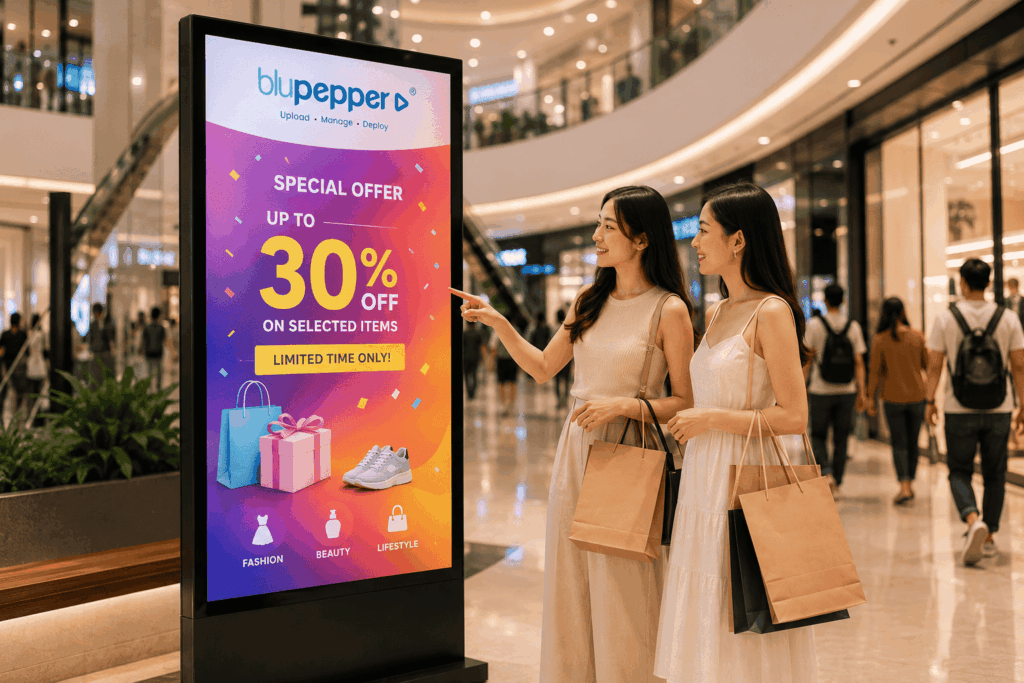
Walk through any major shopping mall in Singapore and you will notice something has changed.
Static posters and printed directories are steadily disappearing, replaced by bright, moving displays that update throughout the day. These digital signage shopping malls Singapore installations are not just decorative upgrades. They are fundamentally changing how shoppers navigate, engage with brands and make purchasing decisions.
Most shoppers do not consciously think about digital signage, but their behaviour tells a different story. Eye-tracking studies consistently show that movement, colour and dynamic content capture attention far more effectively than static alternatives.
This article examines what shoppers actually notice about digital displays in malls, why those elements matter, and how shopping centres across Singapore are using technology to create more engaging retail environments.
Key Takeaways
- Movement and dynamic content capture shopper attention more effectively than static displays
- Digital signage improves wayfinding, reduces perceived wait times and influences purchasing behaviour
- Shoppers respond to real-time information, personalised messaging and visual storytelling
- Cloud-based systems allow malls to manage content centrally and update displays instantly across multiple zones

Movement Catches the Eye First
Human attention is hardwired to notice movement.
In a busy mall environment filled with competing visual stimuli, static posters simply blend into the background. Digital displays that feature motion graphics, video content or animated transitions immediately stand out.
Shoppers may not consciously register what the screen is showing at first, but the movement pulls their gaze. That initial attention creates an opportunity for the message to land, whether it is a promotional offer, directional information or brand storytelling.
This is why digital signage shopping malls Singapore deployments increasingly prioritise dynamic content over static images, even when the core message remains the same.
Shoppers Trust Screens for Real-Time Information
One of the most practical functions of mall digital signage is delivering real-time updates.
Shoppers instinctively look to screens for information that changes frequently, such as cinema showtimes, restaurant wait times, parking availability, event schedules or promotional countdowns.
Unlike printed materials, digital displays signal that the information is current. This builds trust and reduces frustration, especially in high-traffic environments where outdated information creates confusion.
Malls that use cloud based digital signage Singapore systems can update this information instantly across every connected screen, ensuring consistency and accuracy throughout the property.
Placement Determines What Gets Noticed
Even the most compelling content will fail if the screen is poorly positioned.
Shoppers notice digital signage most when it appears in natural sightlines during their journey through the mall. High-performing placements typically include:
- Escalator landings where shoppers pause momentarily
- Main entrances and atrium areas with high footfall
- Queue zones near food courts or cinemas
- Lift lobbies and waiting areas
- Corridor intersections where shoppers make directional decisions
Strategic placement turns passive displays into active wayfinding and engagement tools that shoppers naturally consult throughout their visit.
Bright, High-Contrast Visuals Stand Out
Shopping malls are brightly lit environments, often with natural light streaming through skylights and glass facades.
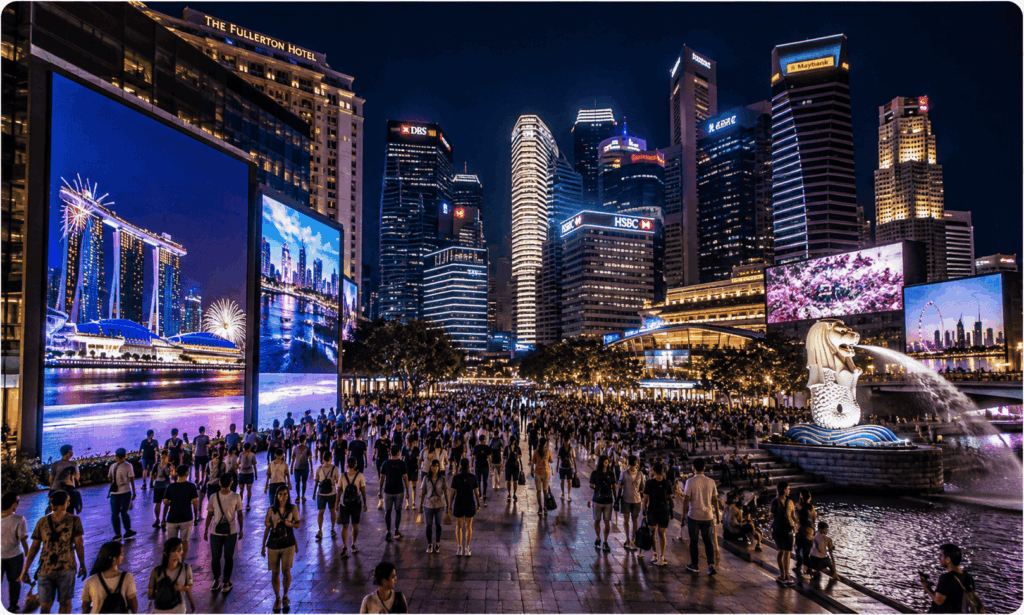
Displays that use high brightness levels and strong colour contrast remain visible even in these challenging lighting conditions. Shoppers notice screens that look crisp and vibrant, while dim or washed-out displays simply disappear into the background.
Professional digital signage software allows content designers to optimise brightness, contrast and colour saturation for specific viewing conditions, ensuring maximum visibility throughout the day.
Personalised Content Feels More Relevant
Generic advertising often gets ignored, but personalised or contextually relevant content captures attention.
Modern digital signage shopping malls Singapore systems can adapt content based on time of day, audience demographics, weather conditions or live events happening in the mall.
Examples include:
- Promoting lunch specials during midday hours
- Highlighting rainy-day activities when weather turns
- Featuring family-friendly content near children’s play areas
- Displaying evening entertainment options as the day progresses
Shoppers notice when content feels relevant to their immediate context, even if they do not consciously recognise the personalisation at work.
Wayfinding Screens Reduce Navigation Anxiety
Large shopping centres can feel overwhelming, especially for first-time visitors.
Interactive wayfinding displays help shoppers locate specific stores, facilities or exits without needing to ask staff or search for printed directories. These systems typically feature touch interfaces, search functions and visual maps that guide users step by step.
Shoppers actively seek out these screens when they need directional help, making them one of the most frequently engaged types of mall signage. The experience feels faster and more intuitive than traditional static maps.
Queue Screens Make Waiting Feel Shorter
Perceived wait time matters more than actual wait time in customer experience.
Digital displays positioned in queue areas serve dual purposes. They entertain shoppers while they wait and they communicate useful information such as estimated wait times, menu options or promotional offers.
This distraction effect makes queues feel shorter and reduces frustration. Shoppers report higher satisfaction when they have something to look at, even if the actual waiting period remains unchanged.
Final Thoughts
Shoppers may not consciously analyse every digital display they encounter, but their behaviour reveals clear patterns.
They notice movement. They trust screens for real-time information. They respond to content that feels relevant, well-placed and visually compelling. And they appreciate tools that make navigation easier and waiting less tedious.
For shopping centres across Singapore, digital signage shopping malls Singapore systems have evolved from simple advertising platforms into essential infrastructure that shapes the entire customer journey.
Looking to upgrade your mall’s communication systems or explore cloud-based signage solutions? Blupepper provides scalable digital signage platforms designed for retail and commercial environments across Singapore.